

The bubbles in champagne are brought on by the release of co2 gas. This gas is produced throughout the fermentation procedure, where yeast breaks down the sugars in the grape juice and transforms them into alcohol.
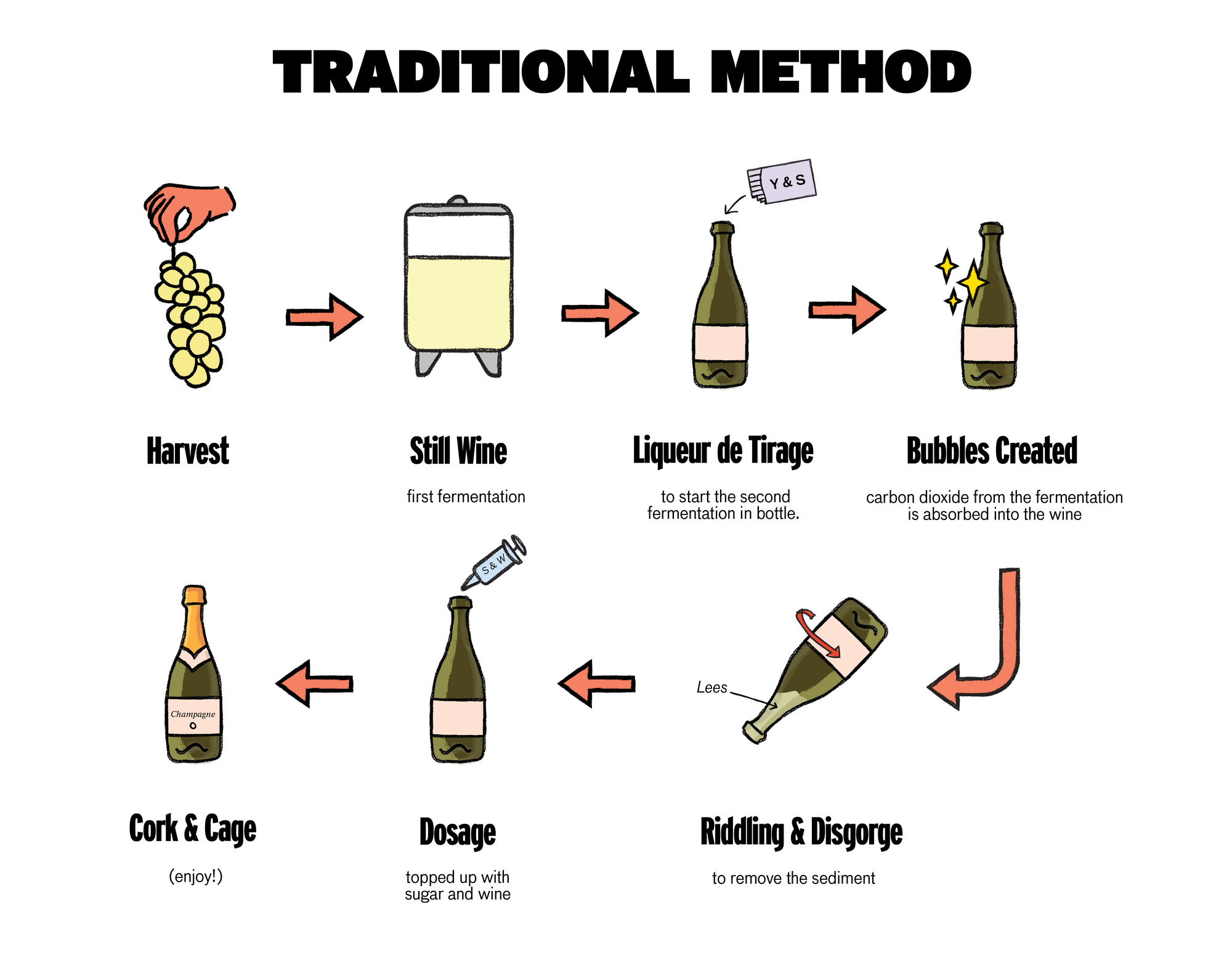
As the fermentation process continues, the carbon dioxide gas is produced in increasing amounts and ultimately starts to escape from the champagne. https://howtomakewine.net/how-to-make-champagne/ is why champagne requires to be kept in a special bottle that can stand up to the pressure of the gas.
The abrupt release of pressure causes the carbon dioxide gas to escape from the liquid in the form of bubbles when you open a bottle of champagne. That's why champagne is constantly served cooled, as this assists to keep the carbon dioxide gas in solution.
Now you know how champagne gets its bubbles!